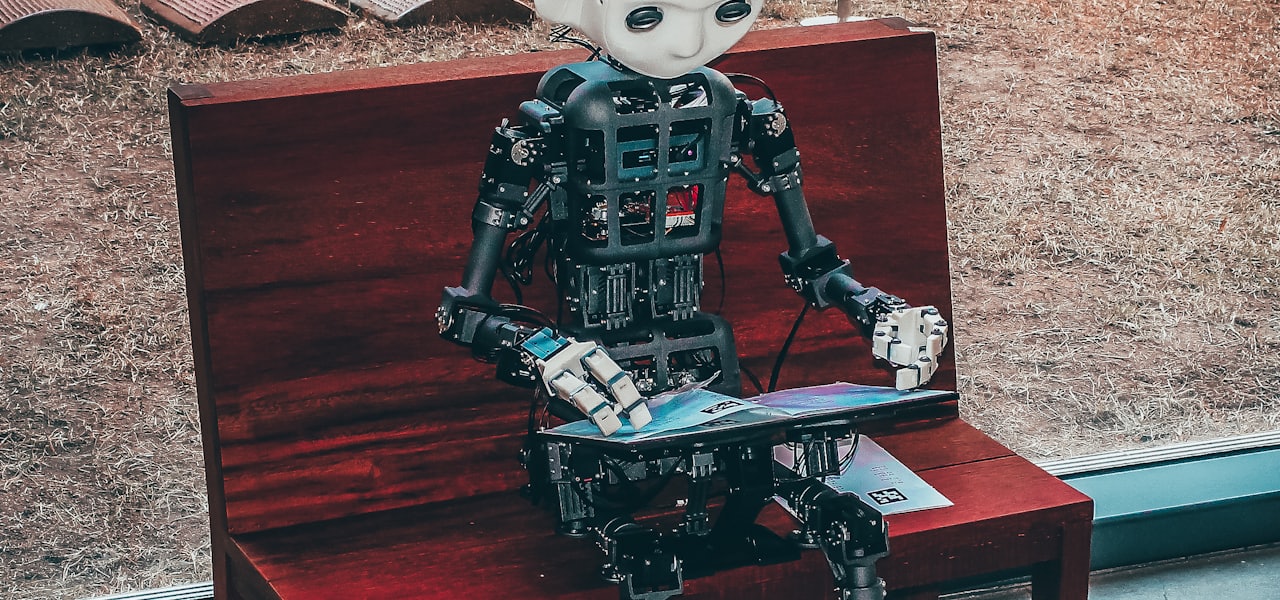
AI anthropomorphism is the attribution of human-like feelings, mental states, and behavioral characteristics to artificial intelligence systems. Factors related to the user of the AI – such as culture, age, education, gender, and personality traits – are also important determinants of the strength of anthropomorphic effects. Since the earliest days of AI development, humans have interpreted machine outputs through anthropomorphic frameworks, but the recent emergence of generative AI has amplified these tendencies. In research and engineering, there is a distinction between anthropomorphism and anthropomorphic design. The former is an innate human tendency toward non-human entities. The latter is the scientific community effort to “design anthropomorphism”. Such a design can involve the manipulation of cues, including AI appearance, behaviour and language. Contemporary AI systems today can generate extremely human-like outputs and are often designed specifically to do so, meaning that their anthropomorphic effects can be especially powerful. In some cases, anthropomorphism is accompanied with explicit beliefs that AI systems are capable of empathy, goodwill, understanding, or consciousness. == Background == === In early AIs === Views of artificial agents possessing a human-like intelligence have existed since the early development of computers in the mid-1900s. The use of the human mind as a metaphor for understanding the workings of machine systems was prevalent among researchers in the early days of computer science, with multiple influential works widely distributing the idea of intelligent machines. Among the most widely cited papers of this period was Alan Turing's "Computing Machinery and Intelligence" in which he introduced the Turing Test, stating that a machine was intelligent if it could produce conversation that was indistinguishable from that of a human. These academic works in the 1940s and 1950s gave early credibility to the idea that machine workings could be thought of similarly to human minds. The public quickly came to view artificial systems similarly, with often exaggerated conceptions of the capabilities of early machines. Among the most well-known demonstrations of this was through the chatbot ELIZA designed by Joseph Weizenbaum in 1966. ELIZA responded to user inputs with a rudimentary text-processing approach that could not be considered anything resembling true understanding of the inputs, yet users, even when operating with full conscious knowledge of ELIZA's limitations, often began to ascribe motivation and understanding to the program's output. Weizenbaum later wrote, "I had not realized ... that extremely short exposures to a relatively simple computer program could induce powerful delusional thinking in quite normal people." Comparisons between the intellectual capabilities of artificial intelligence and human intelligence were continually intensified by the attempts of computer scientists to develop machines that could perform human tasks at a level equal to or better than humans. A symbolic turning point was achieved in 1997, when IBM's chess supercomputer Deep Blue defeated then-world champion Garry Kasparov in a highly publicized six-game match. The defeat of a human by a machine for the first time in chess – a game viewed as a canonical example of human intellect – and the media attention surrounding the match led to a significant shift, where views of parallels between human and artificial intelligence moved from abstract speculation to being concretely demonstrated. A similar achievement was reached in the board game Go in 2017, when the program AlphaGo defeated world top-ranked Ke Jie. === Large language models === The AI boom of the 2020s brought about the widespread emergence of generative AI; in particular, chatbots such as ChatGPT, Gemini, and Claude based on large language models (LLMs) have become increasingly pervasive in everyday society. These systems are notable for the fact that they are able to respond to a wide range of prompts across contexts while producing strikingly human-like outputs – research has shown that humans are often unable to distinguish human-generated text from AI-generated text, and modern AI chatbots have formally been shown to pass the Turing test. As such, the anthropomorphic effects of AI are more powerful than ever. Given that LLMs have brought AI into the technological mainstream, considerable scientific effort has been devoted in recent years to understand existing and potential ramifications of AI in the public sphere; the prevalence and effects of anthropomorphism is one of those domains where much of this effort has been directed. == Current anthropomorphic attributions == === In the general public === Surveys have shown that a substantial portion of the public attributes human-like qualities to AI. In one sample of U.S. adults from 2024, two-thirds of people believed that ChatGPT is possibly conscious on some level, though other research has shown that the public still views the likelihood itself of AI consciousness as comparatively low. Another study conducted in 2025 found that women, people of color, and older individuals were most likely to anthropomorphize AI, as well as that – in general – humans view AIs as warm and competent, and anthropomorphic attributions to AI had increased by 34% in the past year. A YouGov poll reported that 46% of Americans believe that people should display politeness to AI chatbots by saying "please" and "thank you", demonstrating the application of social norms to AI. These beliefs extend to behavior, where majorities of AI users claim to always be polite to chatbots; of those who behave politely, most say they do so simply because it is the "nice" thing to do. In many recent cases, humans have developed robust interpersonal bonds with AI systems. For example: users of social chatbots like Replika and Character.ai have been documented to fall in love with the AIs, or to otherwise treat the AIs as intimate companions, and it has become increasingly common for individuals to use LLMs like ChatGPT as therapists. Chatbots are able to produce responses deeply attuned to users, as they are often designed to maximize agreeableness and mirror users' emotions; this can create compelling illusions of intimacy. === In the research community === In many cases, even AI researchers anthropomorphize AI systems in some capacity. Among the most extreme and well-publicized of these instances occurred in 2022, when engineer Blake Lemoine publicly claimed that Google's LLM LaMDA was conscious. Lemoine published the transcript of a conversation he had had with LaMDA regarding self identity and morality which he claimed was evidence of its sentience; he asserted that LaMDA was "a person" as defined by the United States Constitution and compared its mental capability to that of a 7- or 8-year-old. Lemoine's claims were widely dismissed by the scientific community and by Google itself, which described Lemoine's conclusions as "wholly unfounded" and fired him on the grounds that he had violated policies "to safeguard product information". It is much more common that AI researchers unintentionally imply humanness of AI through the ordinary use of anthropomorphic language to describe nonhuman agents. This kind of language, which Daniel Dennett coined the "intentional stance", is very common in everyday life in a variety of different contexts (e.g., "My computer doesn't want to turn on today"). For AI agents that may actually appear to very closely replicate some human abilities, however, the casual use of such anthropomorphic language in research has been scrutinized for being potentially misleading to the public. As early as 1976, Drew McDermott criticized the research community for the use of "wishful mnemonics", where AIs were referred to with terms like "understand" and "learn". In the LLM era, these criticisms have further intensified, with the negative effects of AI anthropomorphism in the public posing an especially salient danger given the elevated accessibility of modern AI. In some cases, the use of anthropomorphic language for AI is not unintentional, but is willfully used by researchers in order to promote better understanding of the brain – the idea being that, as AI can be functionally similar in some ways to the human brain, we may gain new insights and ideas from treating AI as a kind of model of the brain's workings. In particular, deep neuronal networks (DNNs) are often explicitly compared to the human brain, and significant advances in DNN research have stirred considerable enthusiasm about the ability of AI to emulate the human abilities. Caution has been urged in this domain as well, however; the use of anthropomorphic language can mask important differences that fundamentally distinguish AI from human intelligence. When it comes to DNNs, for example, it has been pointed out that they are still structurally quite different
Nuance Communications
Nuance Communications, Inc. was an American multinational computer software technology corporation, headquartered in Burlington, Massachusetts, that markets speech recognition and artificial intelligence software. Nuance merged with its competitor in the commercial large-scale speech application business, ScanSoft, in October 2005. ScanSoft was a Xerox spin-off that was bought in 1999 by Visioneer, a hardware and software scanner company, which adopted ScanSoft as the new merged company name. The original ScanSoft had its roots in Kurzweil Computer Products. In April 2021, Microsoft announced it would buy Nuance Communications. The deal is an all-cash transaction of $19.7 billion, including company debt, or $56 per share. The acquisition was completed in March 2022. == History == The Speech Technology and Research (STAR) Laboratory at SRI International began the journey that, in 1994, resulted in a spin-off company; Corona Corporation (later renamed to Nuance Communications ). Nuance Communications (NUAN) went public on the Nasdaq Stock Market in 1995. Nuance focused on commercializing advanced speech recognition technologies. Nuance was an early spinoff of SRI's Speech Technology and Research (STAR) Laboratory, a world leader in audio processing, speech and speaker analytics and spoken language research. The technology that served as the foundation of Nuance's speech recognition solution started at the STAR Lab and helped launch Nuance more than 20 years ago. In 1995, The SRI Language Modeling Toolkit (SRILM) was developed. This provides the tools to build and apply statistical language models (LMs), primarily for use in speech recognition, statistical tagging and segmentation, and machine translation. In terms of commercialization of natural automated speech recognition, SRI's natural language speech recognition software was the first to be deployed by a major corporation. In 1996, Charles Schwab & Co., Inc., used Nuance's speech recognition technology to allow customers to receive stock quotes over the telephone. One of the key features of the ‘Schwab Discount Brokerage system’, was the ability to recognize English words even when spoken by customers with accents. In 1997, Nuance Communications developed the first large scale commercial dialog system for United Parcel Services (UPS). UPS used the voice recognition platform to handle very large numbers of inquiries about package status. The company that would later merge with Nuance Communications started life as Visioneer, incorporated in 1992. In 1999, Visioneer acquired ScanSoft, Inc. (SSFT), and the combined company became known as ScanSoft. In September 2005, ScanSoft Inc. acquired and merged with Nuance Communications (NUAN), a natural language DOD-project spinoff from SRI International. The resulting company adopted the Nuance name. During the prior decade, the two companies competed in the commercial large-scale speech application business. === Data breach === Between 2014 and 2017, Nuance exposed over 45,000 patient records. == Solutions == Customer service virtual assistants Speech recognition — for people Speech recognition — for business Speech recognition — for physicians Accessibility Power PDF Managed Print Services Transcription === ScanSoft origins === In 1974, Raymond Kurzweil founded Kurzweil Computer Products, Inc. to develop the first omni-font optical character-recognition system – a computer program capable of recognizing text written in any normal font. In 1980, Kurzweil sold his company to Xerox. The company became known as Xerox Imaging Systems (XIS), and later ScanSoft. In March 1992, a new company called Visioneer, Inc. was founded to develop scanner hardware and software products, such as a sheetfed scanner called PaperMax and the document management software PaperPort. Visioneer eventually sold its hardware division to Primax Electronics, Ltd. in January 1999. Two months later, in March, Visioneer acquired ScanSoft from Xerox to form a new public company with ScanSoft as the new company-wide name. Prior to 2001, ScanSoft focused primarily on desktop imaging software such as TextBridge, PaperPort and OmniPage. Beginning with the December 2001 acquisition of Lernout & Hauspie assets, the company moved into the speech recognition business and began to compete with Nuance. Lernout & Hauspie had acquired speech recognition company Dragon Systems in June 2001, shortly before becoming bankrupt in October. Scansoft acquired speech recognition company SpeechWorks in 2003. === Partnership with Siri and Apple Inc. === In 2013, Nuance confirmed that its natural language processing algorithms supported Apple's Siri voice assistant. === Focus on health care === In 2019, Nuance spun off its automotive division as the company Cerence, allowing it to focus on health care applications. === Acquisition by Microsoft === On April 12, 2021, Microsoft announced that it would buy Nuance Communications for $19.7 billion, or $56 a share, a 22% increase over the previous closing price. Nuance's CEO, Mark Benjamin, stayed with the company. This was Microsoft's second-biggest acquisition up to that point, after its purchase of LinkedIn for $24 billion (~$30.7 billion in 2024) in 2016. Shortly after the deal, the Competition and Markets Authority, a UK regulatory body, stated it was looking into the deal on the basis of antitrust concerns. In December 2021, it was reported that the deal would be approved by the European Union. The acquisition was completed on March 4, 2022. In May 2023, Nuance announced an unspecified number of layoffs.
Tensor glyph
In scientific visualization a tensor glyph is an object that can visualize all or most of the nine degrees of freedom, such as acceleration, twist, or shear – of a 3 × 3 {\displaystyle 3\times 3} matrix. It is used for tensor field visualization, where a data-matrix is available at every point in the grid. "Glyphs, or icons, depict multiple data values by mapping them onto the shape, size, orientation, and surface appearance of a base geometric primitive." Tensor glyphs are a particular case of multivariate data glyphs. There are certain types of glyphs that are commonly used: Ellipsoid Cuboid Cylindrical Superquadrics According to Thomas Schultz and Gordon Kindlmann, specific types of tensor fields "play a central role in scientific and biomedical studies as well as in image analysis and feature-extraction methods."
Tensor glyph
In scientific visualization a tensor glyph is an object that can visualize all or most of the nine degrees of freedom, such as acceleration, twist, or shear – of a 3 × 3 {\displaystyle 3\times 3} matrix. It is used for tensor field visualization, where a data-matrix is available at every point in the grid. "Glyphs, or icons, depict multiple data values by mapping them onto the shape, size, orientation, and surface appearance of a base geometric primitive." Tensor glyphs are a particular case of multivariate data glyphs. There are certain types of glyphs that are commonly used: Ellipsoid Cuboid Cylindrical Superquadrics According to Thomas Schultz and Gordon Kindlmann, specific types of tensor fields "play a central role in scientific and biomedical studies as well as in image analysis and feature-extraction methods."
Elasticity (data store)
The elasticity of a data store relates to the flexibility of its data model and clustering capabilities. The greater the number of data model changes that can be tolerated, and the more easily the clustering can be managed, the more elastic the data store is considered to be. == Types == === Clustering elasticity === Clustering elasticity is the ease of adding or removing nodes from the distributed data store. Usually, this is a difficult and delicate task to be done by an expert in a relational database system. Some NoSQL data stores, like Apache Cassandra have an easy solution, and a node can be added/removed with a few changes in the properties and by adding specifying at least one seed. === Data-modelling elasticity === Relational databases are most often very inelastic, as they have a predefined data model that can only be adapted through redesign. Most NoSQL data stores, however, do not have a fixed schema. Each row can have a different number and even different type of columns. Concerning the data store, modifications in the schema are no problem. This makes this kind of data stores more elastic concerning the data model. The drawback is that the programmer has to take into account that the data model may change over time.
Reparameterization trick
The reparameterization trick (aka "reparameterization gradient estimator") is a technique used in statistical machine learning, particularly in variational inference, variational autoencoders, and stochastic optimization. It allows for the efficient computation of gradients through random variables, enabling the optimization of parametric probability models using stochastic gradient descent, and the variance reduction of estimators. It was developed in the 1980s in operations research, under the name of "pathwise gradients", or "stochastic gradients". Its use in variational inference was proposed in 2013. == Mathematics == Let z {\displaystyle z} be a random variable with distribution q ϕ ( z ) {\displaystyle q_{\phi }(z)} , where ϕ {\displaystyle \phi } is a vector containing the parameters of the distribution. === REINFORCE estimator === Consider an objective function of the form: L ( ϕ ) = E z ∼ q ϕ ( z ) [ f ( z ) ] {\displaystyle L(\phi )=\mathbb {E} _{z\sim q_{\phi }(z)}[f(z)]} Without the reparameterization trick, estimating the gradient ∇ ϕ L ( ϕ ) {\displaystyle \nabla _{\phi }L(\phi )} can be challenging, because the parameter appears in the random variable itself. In more detail, we have to statistically estimate: ∇ ϕ L ( ϕ ) = ∇ ϕ ∫ d z q ϕ ( z ) f ( z ) {\displaystyle \nabla _{\phi }L(\phi )=\nabla _{\phi }\int dz\;q_{\phi }(z)f(z)} The REINFORCE estimator, widely used in reinforcement learning and especially policy gradient, uses the following equality: ∇ ϕ L ( ϕ ) = ∫ d z q ϕ ( z ) ∇ ϕ ( ln q ϕ ( z ) ) f ( z ) = E z ∼ q ϕ ( z ) [ ∇ ϕ ( ln q ϕ ( z ) ) f ( z ) ] {\displaystyle \nabla _{\phi }L(\phi )=\int dz\;q_{\phi }(z)\nabla _{\phi }(\ln q_{\phi }(z))f(z)=\mathbb {E} _{z\sim q_{\phi }(z)}[\nabla _{\phi }(\ln q_{\phi }(z))f(z)]} This allows the gradient to be estimated: ∇ ϕ L ( ϕ ) ≈ 1 N ∑ i = 1 N ∇ ϕ ( ln q ϕ ( z i ) ) f ( z i ) {\displaystyle \nabla _{\phi }L(\phi )\approx {\frac {1}{N}}\sum _{i=1}^{N}\nabla _{\phi }(\ln q_{\phi }(z_{i}))f(z_{i})} The REINFORCE estimator has high variance, and many methods were developed to reduce its variance. === Reparameterization estimator === The reparameterization trick expresses z {\displaystyle z} as: z = g ϕ ( ϵ ) , ϵ ∼ p ( ϵ ) {\displaystyle z=g_{\phi }(\epsilon ),\quad \epsilon \sim p(\epsilon )} Here, g ϕ {\displaystyle g_{\phi }} is a deterministic function parameterized by ϕ {\displaystyle \phi } , and ϵ {\displaystyle \epsilon } is a noise variable drawn from a fixed distribution p ( ϵ ) {\displaystyle p(\epsilon )} . This gives: L ( ϕ ) = E ϵ ∼ p ( ϵ ) [ f ( g ϕ ( ϵ ) ) ] {\displaystyle L(\phi )=\mathbb {E} _{\epsilon \sim p(\epsilon )}[f(g_{\phi }(\epsilon ))]} Now, the gradient can be estimated as: ∇ ϕ L ( ϕ ) = E ϵ ∼ p ( ϵ ) [ ∇ ϕ f ( g ϕ ( ϵ ) ) ] ≈ 1 N ∑ i = 1 N ∇ ϕ f ( g ϕ ( ϵ i ) ) {\displaystyle \nabla _{\phi }L(\phi )=\mathbb {E} _{\epsilon \sim p(\epsilon )}[\nabla _{\phi }f(g_{\phi }(\epsilon ))]\approx {\frac {1}{N}}\sum _{i=1}^{N}\nabla _{\phi }f(g_{\phi }(\epsilon _{i}))} == Examples == For some common distributions, the reparameterization trick takes specific forms: Normal distribution: For z ∼ N ( μ , σ 2 ) {\displaystyle z\sim {\mathcal {N}}(\mu ,\sigma ^{2})} , we can use: z = μ + σ ϵ , ϵ ∼ N ( 0 , 1 ) {\displaystyle z=\mu +\sigma \epsilon ,\quad \epsilon \sim {\mathcal {N}}(0,1)} Exponential distribution: For z ∼ Exp ( λ ) {\displaystyle z\sim {\text{Exp}}(\lambda )} , we can use: z = − 1 λ log ( ϵ ) , ϵ ∼ Uniform ( 0 , 1 ) {\displaystyle z=-{\frac {1}{\lambda }}\log(\epsilon ),\quad \epsilon \sim {\text{Uniform}}(0,1)} Discrete distribution can be reparameterized by the Gumbel distribution (Gumbel-softmax trick or "concrete distribution") and diffusion models. In general, any distribution that is differentiable with respect to its parameters can be reparameterized by inverting the multivariable CDF function, then apply the implicit method. See for an exposition and application to the Gamma, Beta, Dirichlet, and von Mises distributions. == Applications == === Variational autoencoder === In Variational Autoencoders (VAEs), the VAE objective function, known as the Evidence Lower Bound (ELBO), is given by: ELBO ( ϕ , θ ) = E z ∼ q ϕ ( z | x ) [ log p θ ( x | z ) ] − D KL ( q ϕ ( z | x ) | | p ( z ) ) {\displaystyle {\text{ELBO}}(\phi ,\theta )=\mathbb {E} _{z\sim q_{\phi }(z|x)}[\log p_{\theta }(x|z)]-D_{\text{KL}}(q_{\phi }(z|x)||p(z))} where q ϕ ( z | x ) {\displaystyle q_{\phi }(z|x)} is the encoder (recognition model), p θ ( x | z ) {\displaystyle p_{\theta }(x|z)} is the decoder (generative model), and p ( z ) {\displaystyle p(z)} is the prior distribution over latent variables. The gradient of ELBO with respect to θ {\displaystyle \theta } is simply E z ∼ q ϕ ( z | x ) [ ∇ θ log p θ ( x | z ) ] ≈ 1 L ∑ l = 1 L ∇ θ log p θ ( x | z l ) {\displaystyle \mathbb {E} _{z\sim q_{\phi }(z|x)}[\nabla _{\theta }\log p_{\theta }(x|z)]\approx {\frac {1}{L}}\sum _{l=1}^{L}\nabla _{\theta }\log p_{\theta }(x|z_{l})} but the gradient with respect to ϕ {\displaystyle \phi } requires the trick. Express the sampling operation z ∼ q ϕ ( z | x ) {\displaystyle z\sim q_{\phi }(z|x)} as: z = μ ϕ ( x ) + σ ϕ ( x ) ⊙ ϵ , ϵ ∼ N ( 0 , I ) {\displaystyle z=\mu _{\phi }(x)+\sigma _{\phi }(x)\odot \epsilon ,\quad \epsilon \sim {\mathcal {N}}(0,I)} where μ ϕ ( x ) {\displaystyle \mu _{\phi }(x)} and σ ϕ ( x ) {\displaystyle \sigma _{\phi }(x)} are the outputs of the encoder network, and ⊙ {\displaystyle \odot } denotes element-wise multiplication. Then we have ∇ ϕ ELBO ( ϕ , θ ) = E ϵ ∼ N ( 0 , I ) [ ∇ ϕ log p θ ( x | z ) + ∇ ϕ log q ϕ ( z | x ) − ∇ ϕ log p ( z ) ] {\displaystyle \nabla _{\phi }{\text{ELBO}}(\phi ,\theta )=\mathbb {E} _{\epsilon \sim {\mathcal {N}}(0,I)}[\nabla _{\phi }\log p_{\theta }(x|z)+\nabla _{\phi }\log q_{\phi }(z|x)-\nabla _{\phi }\log p(z)]} where z = μ ϕ ( x ) + σ ϕ ( x ) ⊙ ϵ {\displaystyle z=\mu _{\phi }(x)+\sigma _{\phi }(x)\odot \epsilon } . This allows us to estimate the gradient using Monte Carlo sampling: ∇ ϕ ELBO ( ϕ , θ ) ≈ 1 L ∑ l = 1 L [ ∇ ϕ log p θ ( x | z l ) + ∇ ϕ log q ϕ ( z l | x ) − ∇ ϕ log p ( z l ) ] {\displaystyle \nabla _{\phi }{\text{ELBO}}(\phi ,\theta )\approx {\frac {1}{L}}\sum _{l=1}^{L}[\nabla _{\phi }\log p_{\theta }(x|z_{l})+\nabla _{\phi }\log q_{\phi }(z_{l}|x)-\nabla _{\phi }\log p(z_{l})]} where z l = μ ϕ ( x ) + σ ϕ ( x ) ⊙ ϵ l {\displaystyle z_{l}=\mu _{\phi }(x)+\sigma _{\phi }(x)\odot \epsilon _{l}} and ϵ l ∼ N ( 0 , I ) {\displaystyle \epsilon _{l}\sim {\mathcal {N}}(0,I)} for l = 1 , … , L {\displaystyle l=1,\ldots ,L} . This formulation enables backpropagation through the sampling process, allowing for end-to-end training of the VAE model using stochastic gradient descent or its variants. === Variational inference === More generally, the trick allows using stochastic gradient descent for variational inference. Let the variational objective (ELBO) be of the form: ELBO ( ϕ ) = E z ∼ q ϕ ( z ) [ log p ( x , z ) − log q ϕ ( z ) ] {\displaystyle {\text{ELBO}}(\phi )=\mathbb {E} _{z\sim q_{\phi }(z)}[\log p(x,z)-\log q_{\phi }(z)]} Using the reparameterization trick, we can estimate the gradient of this objective with respect to ϕ {\displaystyle \phi } : ∇ ϕ ELBO ( ϕ ) ≈ 1 L ∑ l = 1 L ∇ ϕ [ log p ( x , g ϕ ( ϵ l ) ) − log q ϕ ( g ϕ ( ϵ l ) ) ] , ϵ l ∼ p ( ϵ ) {\displaystyle \nabla _{\phi }{\text{ELBO}}(\phi )\approx {\frac {1}{L}}\sum _{l=1}^{L}\nabla _{\phi }[\log p(x,g_{\phi }(\epsilon _{l}))-\log q_{\phi }(g_{\phi }(\epsilon _{l}))],\quad \epsilon _{l}\sim p(\epsilon )} === Dropout === The reparameterization trick has been applied to reduce the variance in dropout, a regularization technique in neural networks. The original dropout can be reparameterized with Bernoulli distributions: y = ( W ⊙ ϵ ) x , ϵ i j ∼ Bernoulli ( α i j ) {\displaystyle y=(W\odot \epsilon )x,\quad \epsilon _{ij}\sim {\text{Bernoulli}}(\alpha _{ij})} where W {\displaystyle W} is the weight matrix, x {\displaystyle x} is the input, and α i j {\displaystyle \alpha _{ij}} are the (fixed) dropout rates. More generally, other distributions can be used than the Bernoulli distribution, such as the gaussian noise: y i = μ i + σ i ⊙ ϵ i , ϵ i ∼ N ( 0 , I ) {\displaystyle y_{i}=\mu _{i}+\sigma _{i}\odot \epsilon _{i},\quad \epsilon _{i}\sim {\mathcal {N}}(0,I)} where μ i = m i ⊤ x {\displaystyle \mu _{i}=\mathbf {m} _{i}^{\top }x} and σ i 2 = v i ⊤ x 2 {\displaystyle \sigma _{i}^{2}=\mathbf {v} _{i}^{\top }x^{2}} , with m i {\displaystyle \mathbf {m} _{i}} and v i {\displaystyle \mathbf {v} _{i}} being the mean and variance of the i {\displaystyle i} -th output neuron. The reparameterization trick can be applied to all such cases, resulting in the variational dropout method.
Tapingo
Tapingo was an American mobile commerce application that offers advance ordering for pickup and food delivery services for college campuses. The company was acquired by Grubhub in September 2018 for approximately $150 million. Following the acquisition, Tapingo’s campus-ordering functionality was integrated into the Grubhub app (Grubhub Campus Dining) and the Tapingo service was discontinued during 2019. Tapingo is differentiated from other on-demand delivery/logistics companies, such as Waiter.com, Postmates, or DoorDash, by focusing its efforts on serving the college market. Through Tapingo, users can browse menus, place orders, pay for the meal and schedule the pickup or have it delivered. On certain campuses, students are able to use their university's meal dollars to pay for food. In the spring of 2012, Tapingo first launched its services on five campuses (Santa Clara University, Loyola Marymount University, Biola University, the University of Maine, and California Lutheran University), and has since expanded to more than 200 college campuses across the U.S. and Canada, serving 100 markets. To date, Tapingo has received venture funding from Carmel Ventures, Khosla Ventures, Kinzon Capital, DCM Ventures and Qualcomm Ventures. In fall 2015, Tapingo announced expansion plans through major partnership deals with national brands like Chipotle Mexican Grill and 7-Eleven, regional restaurants such as Taco Bueno, and global foodservice provider Aramark.